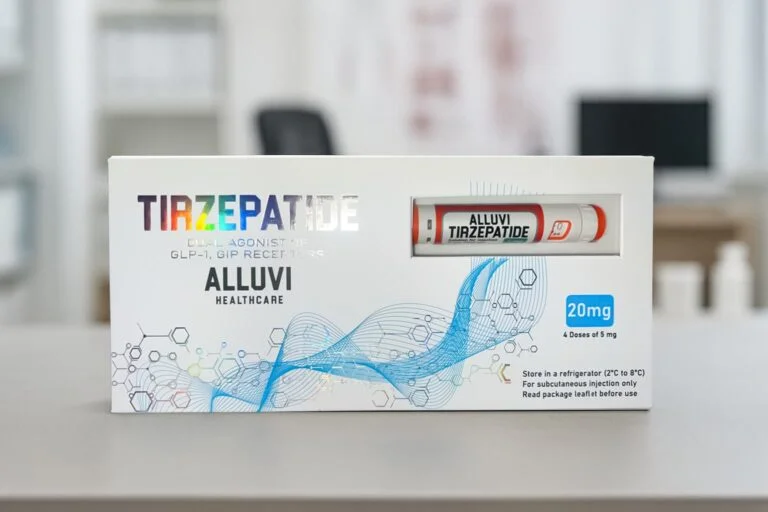
Alluvi Tirzepatide 20mg
£85.00
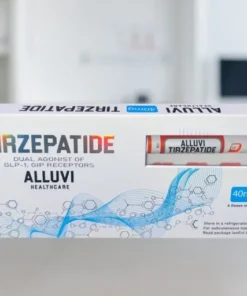
Alluvi Tirzepatide, Tirzepatide 20mg Alluvi Tirzepatide 20mg (R&D Only) is a research-grade formulation containing 20mg of Tirzepatide, a novel investigational peptide. Tirzepatide has attracted significant scientific interest for its potential role in metabolic regulation, weight management, and type 2 diabetes research.
Alluvi Tirzepatide | Tirzepatide 20mg
Alluvi Tirzepatide, Tirzepatide 20mg Alluvi Tirzepatide 20mg (R&D Only) is a research-grade formulation containing 20mg of Tirzepatide, a novel investigational peptide. Tirzepatide has attracted significant scientific interest for its potential role in metabolic regulation, weight management, and type 2 diabetes research. This product is explicitly labeled “R&D Only”, meaning it is not intended for human or veterinary consumption and is not approved for clinical use. Its purpose is to support controlled laboratory studies, formulation testing, and mechanistic exploration.
Alluvi Tirzepatide | Tirzepatide 20mg | Key Features
- Formulation strength: 20mg of Tirzepatide per unit.
- Delivery system: Pre-filled research pen for precise and consistent dosing in experimental setups.
- Quality assurance: Sealed batches to maintain compound purity and stability.
- Storage requirements: Refrigeration at 2–8°C; freezing must be avoided.
- Shipping protocol: Cold packs included to preserve compound integrity during transit.
Alluvi Tirzepatide | Tirzepatide 20mg | Research Applications
- Metabolic studies: Investigating Tirzepatide’s potential effects on glucose regulation, insulin sensitivity, and energy balance.
- Obesity research: Exploring its role in appetite modulation and weight reduction in preclinical models.
- Formulation testing: Assessing stability, solubility, and compatibility with other compounds.
- Mechanistic exploration: Studying pathways related to peptide signaling, metabolic hormones, and cellular responses.
- Comparative analysis: Evaluating Tirzepatide alongside other investigational peptides to understand synergistic or distinct effects.
Clinical Context
Tirzepatide is currently under investigation in clinical research as a dual agonist targeting both GIP (glucose-dependent insulinotropic polypeptide) and GLP-1 (glucagon-like peptide-1) receptors. Early studies suggest it may influence weight loss and metabolic health, but Alluvi Tirzepatide 20mg is not approved for therapeutic use. Its role remains confined to laboratory research, where scientists can explore its biochemical properties and potential applications. Translation into clinical practice requires extensive validation, peer-reviewed evidence, and regulatory approval.
Considerations
- Ethical compliance: Must be used strictly within research environments under institutional and regulatory guidelines.
- Safety protocols: Proper handling, storage, and disposal are essential to maintain compound integrity.
- Limitations: Laboratory findings cannot be extrapolated to clinical practice.
- Legal restrictions: Distribution and use are restricted to R&D contexts, not for consumption.
Be the first to review “Alluvi Tirzepatide 20mg”
Related products

Alluvi Reta Pen
Alluvi Reta Pen
Alluvi Reta Pen
Alluvi Reta Pen
Alluvi Reta Pen
Alluvi Reta Pen
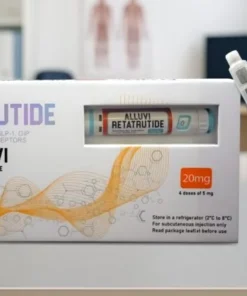
Alluvi Reta Pen

Alluvi Reta Pen
Reviews
There are no reviews yet.